10 Mysterious Places Where Water Vanishes Without a Trace
10. Sinks Canyon: Wyoming's Subterranean River Mystery
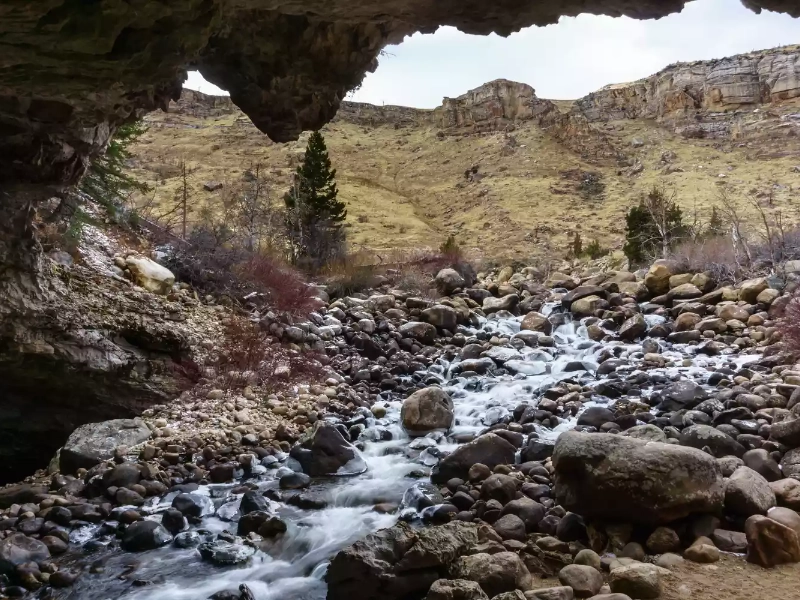
The river's journey between The Sinks and The Rise has been the subject of intensive scientific study. Dye experiments conducted by researchers have revealed that the water takes several hours to travel through the labyrinthine underground structure connecting these two points at a slow pace. This extended transit time, far longer than what would be expected for surface flow over the same distance, suggests the complex and extensive nature of the underground passages the river traverses.
The geological foundation for this remarkable phenomenon lies in the limestone formations that shape the canyon. Limestone, a sedimentary rock composed primarily of calcium carbonate, is particularly susceptible to erosion by slightly acidic water. Over millions of years, the flowing waters of the Popo Agie River have carved an intricate network of caves, tunnels, and passages within the limestone bedrock, creating the underground route the river currently follows.
This karst formation process, where water dissolves soluble rocks to create underground drainage systems, is responsible for many of the world's most spectacular cave systems and disappearing rivers. In Sinks Canyon's case, the karst topography has created a unique hydrological system that continues to evolve over time.
The disappearance and reemergence of the Popo Agie River in Sinks Canyon has significant implications for local ecology and water resources. As the river travels underground, it interacts with groundwater systems, affecting the availability and quality of water in the surrounding area. The underground journey also influences the river's temperature and chemical composition, creating unique habitats both above and below ground for various plant and animal species adapted to these specific conditions.
The phenomenon in Sinks Canyon also presents interesting opportunities and challenges for water resource management. The area's complex hydrology must be carefully considered in any plans for water use or conservation, as changes to the river's flow or water quality could have far-reaching effects on both surface and subsurface ecosystems.
Sinks Canyon also serves as an excellent natural laboratory for geologists, hydrologists, and ecologists studying karst systems and underground river dynamics. Ongoing research in the canyon continues to yield new insights into the mechanisms behind these unusual geological formations and the ecosystems they support.
The site has also become a popular destination for visitors and outdoor enthusiasts, offering a tangible and awe-inspiring example of Earth's active geology. Educational programs and interpretive facilities at Sinks Canyon State Park help raise public awareness about karst environments, water resources, and the importance of conservation efforts in these fragile settings.
As climate change continues to alter precipitation patterns and temperature regimes around the world, the behavior of systems like Sinks Canyon may provide important indicators of broader environmental changes. Changes in the river's flow patterns, underground travel times, or water quality could serve as early warning signs of climate-related impacts on karst landscapes and water resources more generally.
The mysteries of Sinks Canyon extend beyond its geology and hydrology. The area has been home to human communities for thousands of years, with Native American tribes long considering it a place of spiritual significance. Local legends and cultural narratives have woven the disappearing river into a testament to the profound impact such natural wonders can have on human communities and belief systems.
Recent efforts have sought to balance scientific research and public interest in Sinks Canyon with respect for its natural integrity. Careful management strategies aim to preserve the delicate underground ecosystem while still allowing for recreation and education. This approach recognizes the importance of Sinks Canyon not just as a geological curiosity but also as a vital component of the region's natural heritage and ecological balance.
The story of Sinks Canyon serves as a powerful reminder of the hidden complexity beneath Earth's surface. It highlights the importance of comprehensive approaches to water resource management, as surface and subsurface water systems are intimately connected. As we continue to unravel the mysteries of places like Sinks Canyon, we not only gain scientific knowledge but also develop a deeper appreciation for the intricate and often invisible processes that shape our world.
Furthermore, the phenomenon at Sinks Canyon raises important questions about similar karst systems found around the world. How many other rivers might be flowing unseen beneath our feet? What role do these underground rivers