10 Mysterious Places Where Water Vanishes Without a Trace
2. Lake Cachet II: The Vanishing Glacial Lake of Patagonia
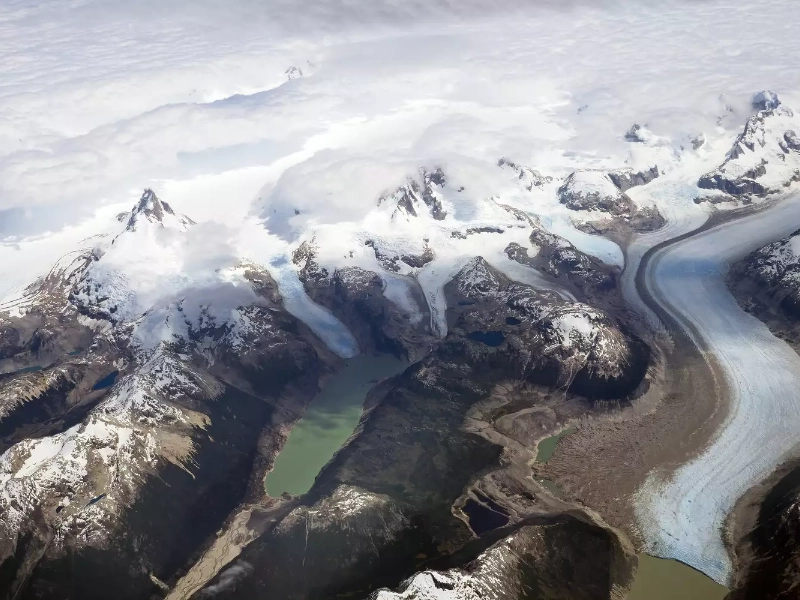
However, further investigation and research revealed a different and equally fascinating explanation for the lake's vanishing behavior. Scientists discovered that a phenomenon called a glacial lake outburst flood (GLOF) was actually responsible for the drainage. This occurs when a glacier damming a lake suddenly collapses, releasing the stored water in a catastrophic flood.
Lake Cachet II is dammed by the Colonia Glacier, a massive ice formation experiencing rapid melting rates in recent years due to global climate change. As the glacier melted at unprecedented speeds, the increasing water pressure on the ice dam eventually reached a critical point. The immense force caused the glacier dam to fail, creating a hidden tunnel approximately five miles beneath the surface.
This subglacial tunnel acted like a massive drain, allowing an estimated 200 million cubic meters of water to rapidly flow from Lake Cachet II. The water surged into the nearby Colonia Lake and then into the Colonia River, dramatically altering local hydrology and potentially affecting downstream ecosystems and communities.
Lake Cachet II is particularly noteworthy because this was not a one-time event. Since the initial outburst in 2007, the lake has undergone multiple cycles of refilling and emptying. This recurring phenomenon has transformed the region into a natural laboratory for glaciologists and hydrologists, providing unprecedented opportunities to study glacier lake dynamics and their responses to climate change.
Scientists have expressed concerns about the broader implications of such phenomena in a warming world regarding Lake Cachet II's repeated disappearance. As global temperatures rise, many glaciers worldwide are retreating rapidly. This retreat can lead to the formation of new glacial lakes or the expansion of existing ones, increasing the risk of GLOFs in various mountainous regions across the globe.
The Lake Cachet II situation serves as a stark reminder of the complex and often unpredictable ways climate change can manifest in natural systems. It highlights the importance of continued research and monitoring in glacial environments, not only to understand these remarkable geological phenomena but also to assess and mitigate potential risks to ecosystems and downstream communities.