10 Mysterious Places Where Water Vanishes Without a Trace
5. Devil's Kettle Falls: The Mysterious Waterfall of Minnesota
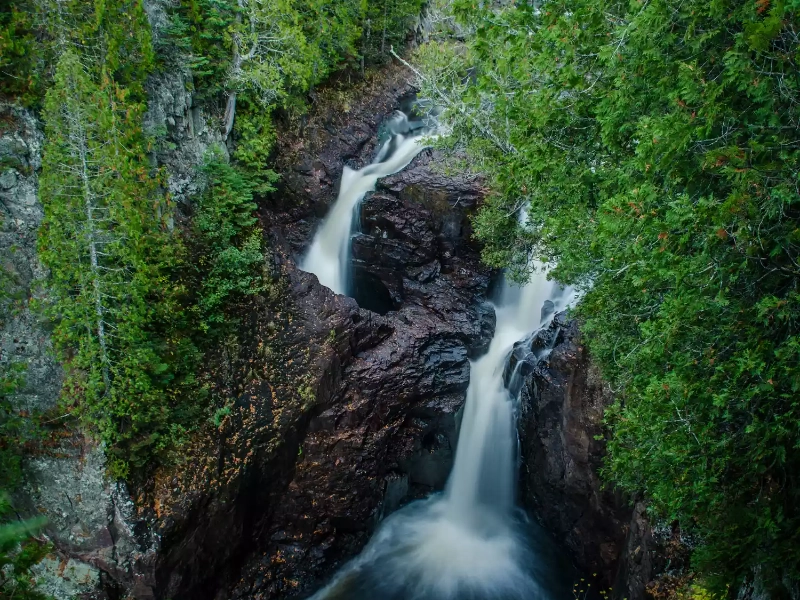
Scientists and hydrologists have long suspected that the water entering the pothole eventually rejoins the river downstream. This theory is supported by flow measurements taken above and below the falls, which show that the river's water volume remains relatively constant. If the water entering the pothole were truly disappearing into an underground system disconnected from the river, one would expect the river's flow rate below the falls to decrease significantly.
Over the years, researchers and curious visitors have devised various methods to try and track the water's passage through the pothole. These efforts have included dropping ping-pong balls, colored dyes, and other objects down the hole and searching for signs of them downstream. However, none of these experiments have yielded definitive results; no evidence of the introduced materials has ever been detected in the river below the falls.
The lack of conclusive evidence has only deepened the mystery surrounding Devil's Kettle Falls and fueled numerous legends and theories. Some have speculated about the existence of long, winding tunnels or vast underground caverns capable of carrying water for miles before resurfacing or rejoining the river. Others have hypothesized connections to distant bodies of water or even suggested that the water might be feeding into an entirely different watershed.
From a geological perspective, the formation of Devil's Kettle Falls is most likely related to the complex bedrock geology of Lake Superior's North Shore. The area is characterized by a series of ancient lava flows that have created layers of different types of igneous rock. The pothole itself may have formed through erosion, where the action of water and sediment over thousands of years wore away softer rock to create the distinctive circular formation we see today.
The ongoing mystery of Devil's Kettle Falls highlights the challenges inherent in studying complex geology and hydrology. Underground water movement can be extremely difficult to trace, particularly in areas with intricate rock formations. The opacity of the water and the inaccessibility of subterranean conduits further complicate efforts to track the path of the vanished water.
Despite the lack of a definitive answer, Devil's Kettle Falls continues to fascinate scientists, environmentalists, and visitors alike. The site serves as a reminder of the many natural mysteries that still exist on our planet, even in well-studied regions. It also underscores the importance of continued research and the potential for new technologies and methods to shed light on long-standing geological puzzles.
Beyond attempting to solve this particular mystery, the ongoing investigation of the Devil's Kettle phenomenon contributes to our broader understanding of karst topography, underground water systems, and the geological processes that shape our landscapes. The insights gained from studying this unusual waterfall may have applications far beyond this single location, informing our understanding of water resources, geological hazards, and ecosystem dynamics in similar environments around the world.