10 Mysterious Places Where Water Vanishes Without a Trace
8. Lake George: Australia's Enigmatic Vanishing Lake
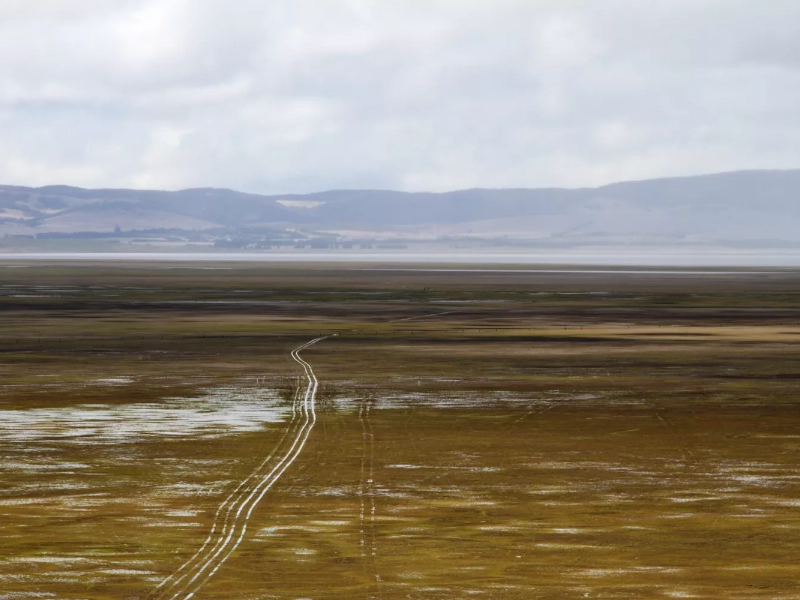
Lake George's shallow nature, with an average depth of only three to four feet even at full capacity, significantly contributes to its susceptibility to complete desiccation. This shallow profile means that even small changes in water input or increased evaporation rates can dramatically affect the lake's total volume and surface area. Extended drought periods, not uncommon in this part of Australia, can cause the lake to dry out completely, transforming from a vibrant aquatic habitat into a barren, salt-encrusted plain.
Another fascinating aspect of Lake George's character is its salinity. Despite being an inland water feature, the lake's waters are nearly as salty as seawater. This high salt concentration results from the continuous accumulation of minerals carried in by inflowing streams and rainfall, combined with the concentrating effect as water evaporates over time. The lake's salinity plays a crucial role in determining its unique ecosystem, as it supports specialized plants and animals adapted to these brackish conditions.
Throughout its recorded history, Lake George has experienced numerous cycles of filling and drying. These fluctuations have had profound effects on both the natural environment and human activities in the surrounding area. When full, the lake supports a thriving fishery, providing both recreational and commercial fishing opportunities. The water attracts a diverse array of bird species, making the lake a popular destination for birdwatchers and an important habitat for waterbirds.
Conversely, when Lake George disappears during dry periods, the exposed lakebed becomes increasingly valuable to local industries. Historically, farmers in the area have taken advantage of periodic dry spells to graze sheep and cattle on the nutrient-rich soil of the former lakebed. This adaptive use of the land demonstrates the ingenuity and resilience of local communities in response to the lake's unpredictable nature.
Lake George's recurring disappearance and reappearance have captured the imagination of both local folklore and scientific inquiry. Researchers study the lake's hydrological dynamics, seeking to understand the complex interplay of factors that control its water levels. This research not only sheds light on Lake George's specific dynamics but also contributes to our broader understanding of endorheic basins and their responses to climate variability.