9 Exercises You’d Better Avoid If You Dream of Having a Feminine Body
Advertisement
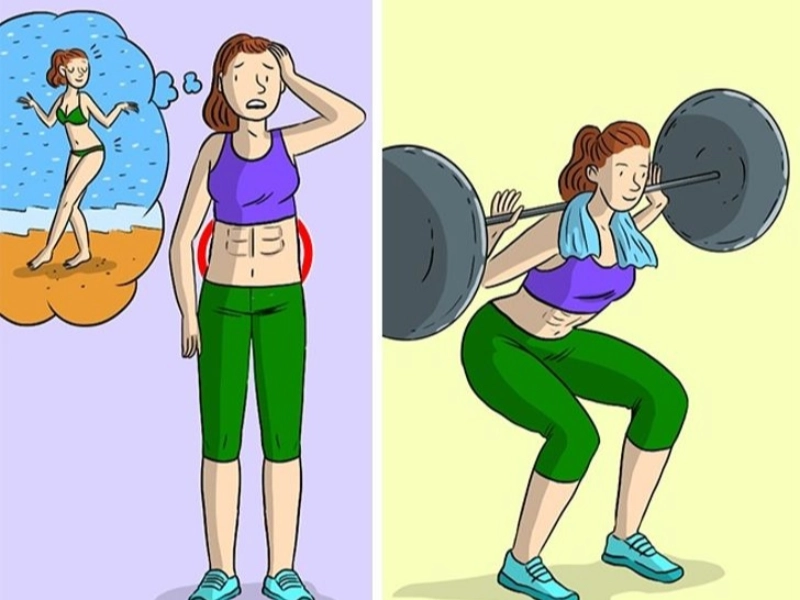
heavy-weight squats
Advertisement
While heavy-weight squats are an excellent exercise for building overall strength and developing lower body and core muscles, it's important to address the concern raised by the popular women's fitness channel regarding potential increases in muscular mass around the waist area.
Squats, when performed correctly with proper form and reasonable weight loads, primarily target the muscles of the lower body, including the quadriceps, hamstrings, and glutes. Additionally, they engage the core muscles, including the abdominal muscles and the erector spinae (back muscles), which are responsible for maintaining proper posture and stability during the movement.
However, it's important to note that the core muscles targeted during squats are primarily responsible for stabilization and support, rather than necessarily leading to significant hypertrophy (muscle growth) in the waistline area. The muscles that contribute to the appearance of a thicker waist are primarily the obliques, which are not the primary movers in the squat exercise.
That being said, it's possible for some individuals, particularly those with a genetic predisposition for developing a thicker waistline or those who engage in excessive caloric surpluses and heavy weight training, to experience some muscular growth in the oblique area. However, this is typically not a direct result of squatting alone but rather a combination of overall muscle growth and body composition changes.
To minimize the potential for excessive muscular development around the waist area while still benefiting from the numerous advantages of squats, it's recommended to:
1. Maintain a moderate to high-rep range (8-12 reps or higher) and avoid excessive weight loads that may promote excessive muscle growth.
2. Incorporate cardio and high-intensity interval training (HIIT) to promote overall fat loss and muscle definition.
3. Follow a balanced and nutrient-dense diet that supports your fitness goals without excessive caloric surpluses.
4. Consider incorporating targeted oblique exercises with caution and moderation to avoid overdevelopment of the oblique muscles.
By following a well-rounded approach and avoiding excessive weight loads or excessive caloric surpluses, it's possible to reap the benefits of squats for overall strength, lower body development, and core stability without significantly increasing muscular mass around the waistline area.
Advertisement
You May Like