Exploring the Strangest and Most Mysterious Finds in the Universe
2. 79 Moons in Jupiter's Orbit
Found Year: 1610
Discovered By: Galileo Galilei
Location: The Region Surrounding Jupiter
Around the gas giant Jupiter, there are currently 53 officially named moons, with an additional 16 awaiting names. Since 1999, astronomers have discovered 61 new moons, expanding our understanding of this fascinating planetary system. Galileo Galilei was the first to observe and document the initial four moons—Io, Europa, Ganymede, and Callisto—in 1610, marking a significant milestone in astronomical history.
Conclusion In summary, Jupiter's extensive moon system continues to intrigue scientists and enthusiasts alike. As new moons are discovered and named, they provide valuable insights into the dynamics and formation of celestial bodies in our solar system.
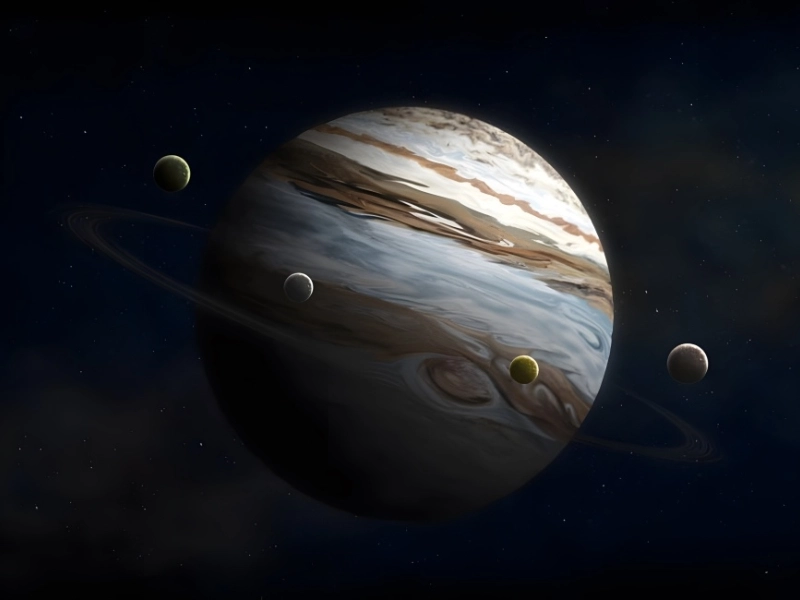
There Are 79 Moons Around Jupiter
Measurements of the four moons initially identified by Galileo Galilei—Europa, Callisto, Io, and Ganymede—reveal that they are significantly larger than Earth's moon. In contrast, the remaining 74 moons around Jupiter are considerably smaller, showcasing a diverse range of sizes within this extensive moon system.
Conclusion In summary, Jupiter's moons present a fascinating contrast in scale, with its largest moons dwarfing our own. This diversity not only enriches our understanding of celestial mechanics but also highlights the complexity of the Jovian system.